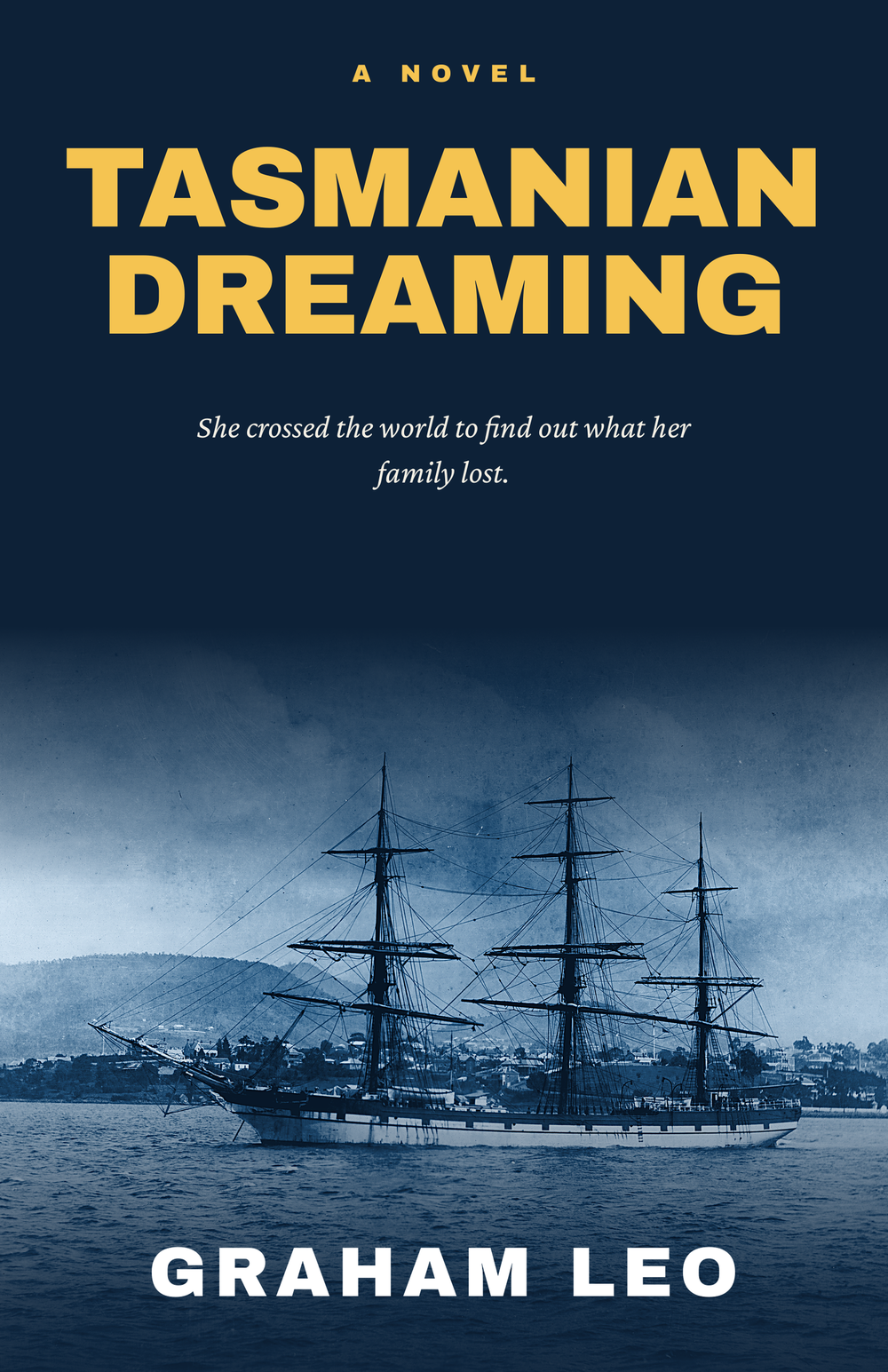
Tasmanian Dreaming
2026 · UpperRoom Press
Erin Montgomery has always felt not quite at home. When she watches an Australian Prime Minister apologise for the wrongs of a century, a half-remembered family story — land lost, or perhaps taken — sends the Oxford literature student to Tasmania, into the archives of a colony and the long shadow of her own ancestry. A novel about inheritance, injury and repair, and the question of where a person truly belongs.
Buy now
Available Formats
- Publisher
- UpperRoom Press
- Year
- 2026
- ISBN
- 978-1-7648831-0-8
- Category
- Novel
Why read this book
If you have ever felt that home is somewhere you have not been yet, this novel will find you. Graham imagined the story with his first wife Mieke while driving Tasmania’s east coast, and it is dedicated to her memory. It reads as literary fiction — Oxford tutorials, colonial land records, a working Tasmanian farm — while asking harder questions about what one generation owes another. Professor Louis Markos calls it C. S. Lewis’s ‘smuggled theology’ done well: nothing preached, everything present. An appendix of study-unit suggestions makes it readily usable in senior English classrooms.
From the book
What would it be like, she wonders, to finally come back to her origins, to know what had really happened, to repair any breaches that her ancestors had somehow left broken in the walls of her own family history?— Graham Leo, Tasmanian Dreaming
She had nursed a sense of feeling, well, not quite at home.— Graham Leo, Tasmanian Dreaming
The quiet churchyard faded from view as the clear Tasmanian dusk settled around them.— Graham Leo, Tasmanian Dreaming
Frequently asked questions
Is this the same book as A Clear Dusk Settles?+
Yes. The novel was first published as A Clear Dusk Settles by Ark House Press in 2018. It has been revised and republished under the title Tasmanian Dreaming, which better reflects what the story is about. The Christopher Brennan lines that gave the original its name remain on the title page.
Who is this book for?+
Readers of literary fiction, anyone drawn to Australian history and the story of reconciliation, and secondary students and teachers. It is written to be read at 15 or at 75.
Can it be used in schools?+
Yes — that was part of the intention. The book includes an appendix of suggestions for teachers developing study units, and it handles its themes in a way that suits a public-school setting as readily as a Christian one.
Is it a Christian novel?+
It is a novel written by a Christian, which is a different thing. Faith is present in the story the way it is present in life — in how people act, forgive, and decide what they owe each other — rather than as a message bolted on.


